Data Compression with FLAM
Data compression that pays off.
It is no longer enough to simply make data “smaller.” FLAM analyzes data in terms of content and structure, separates it according to type, importance, and protection requirements, and thus achieves significantly better compression results than traditional tools..
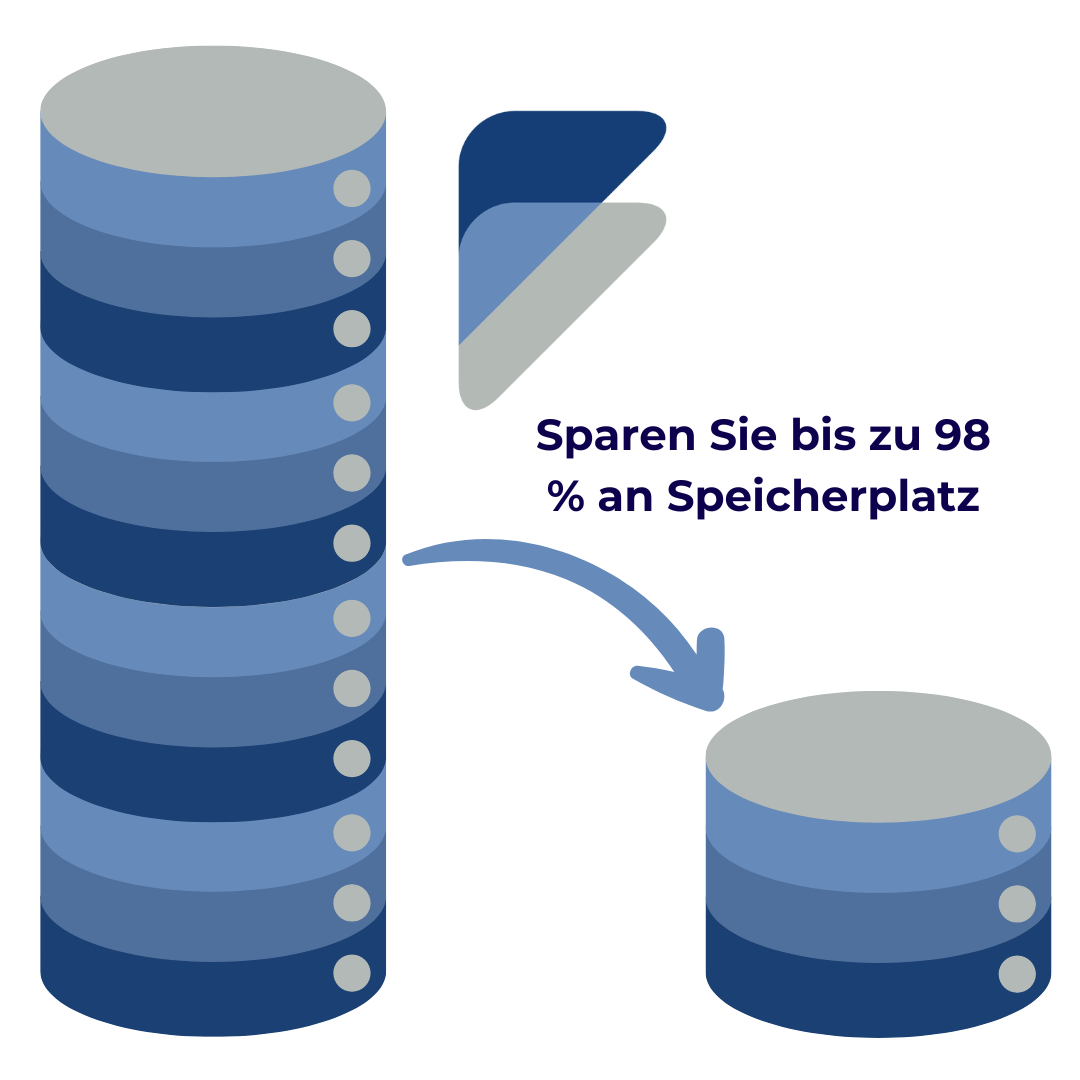
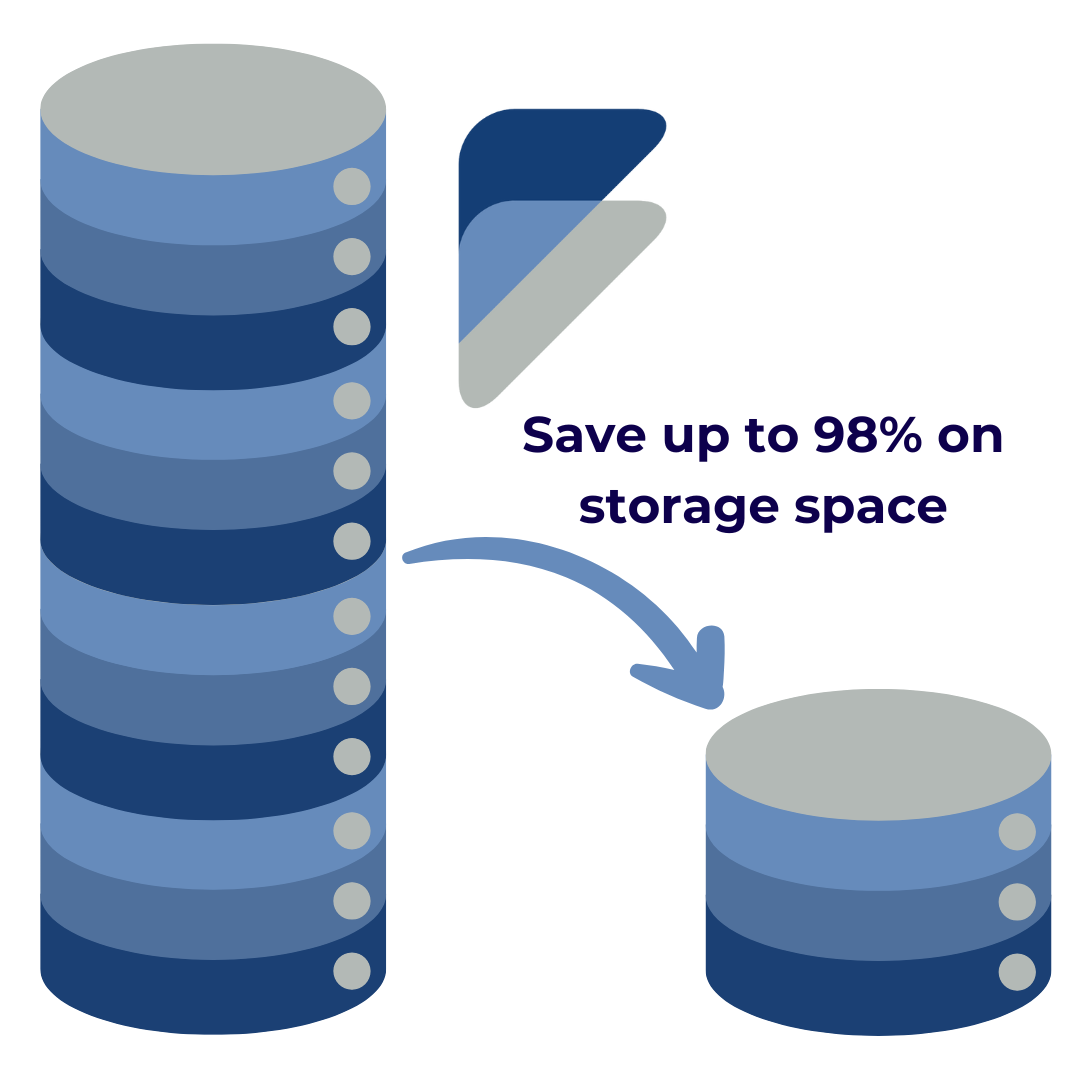
Data compression that pays off.
It is no longer enough to simply make data “smaller.” FLAM analyzes data in terms of content and structure, separates it according to type, importance, and protection requirements, and thus achieves significantly better compression results than traditional tools..
The special features behind the FLAM logic
The special features behind the FLAM logic
Targeted data processing
FLAM does not treat all data equally.
Each column is analyzed individually and assigned to a suitable processing pool depending on its content and protection requirements. This means that no computing power is wasted but is used in a targeted manner to achieve maximum compression
Search despite encryption
FLAM ermöglicht es in den komprimierten und verschlüsselten Daten zu suchen , ohne diese vollständig zu entschlüsseln. Hierbei können sogenannte Subsets mit den immer noch komprimierten und verschlüsselten Ergebnismengen zusammengestellt werden.encrypted data, without decrypting it completely. Subsets can be compiled with the result sets still encrypted.
This is unique on the market.
Data-Aware Architecture
FLAM analyzes each column of your data individually: by structure, content, and protection requirements.
On this basis, it determines whether data is compressed, encrypted, copied, or ignored. Similar columns are grouped together to make processing more efficient.
Platform independence & openness
FLAM runs on almost all platforms from mainframes to UNIX and Windows to cloud systems. It supports over 60 file formats.
This makes FLAM a true integration tool.
More than just compression – FLAM analyzes content and treats it selectively
In practice, FLAM can often reduce 100MB to just 2-10MB. This corresponds to a 10- to 50-fold reduction in data, depending on the data format. And it does so with significantly less computing power than ZIP, GZIP, or other standard methods.
How does Flam work?
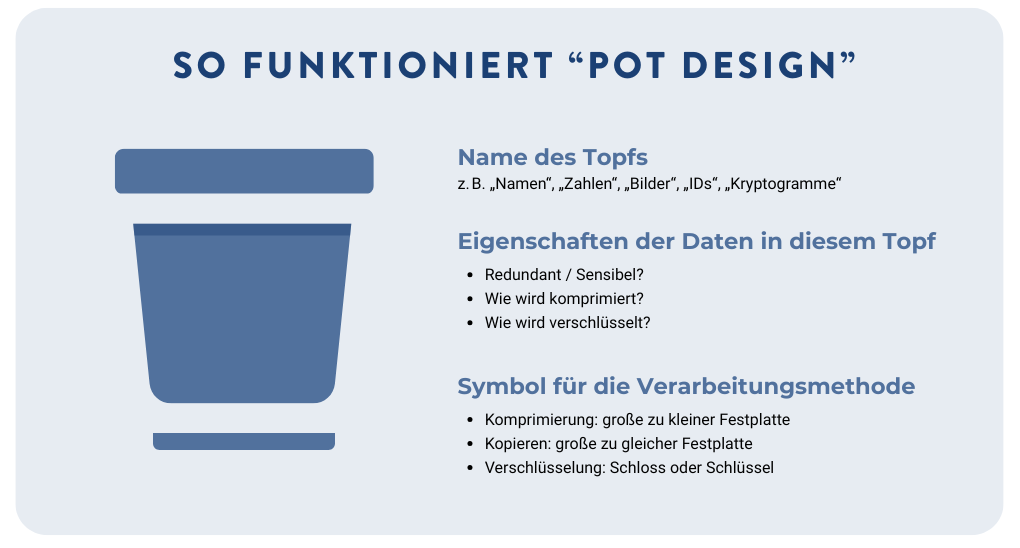
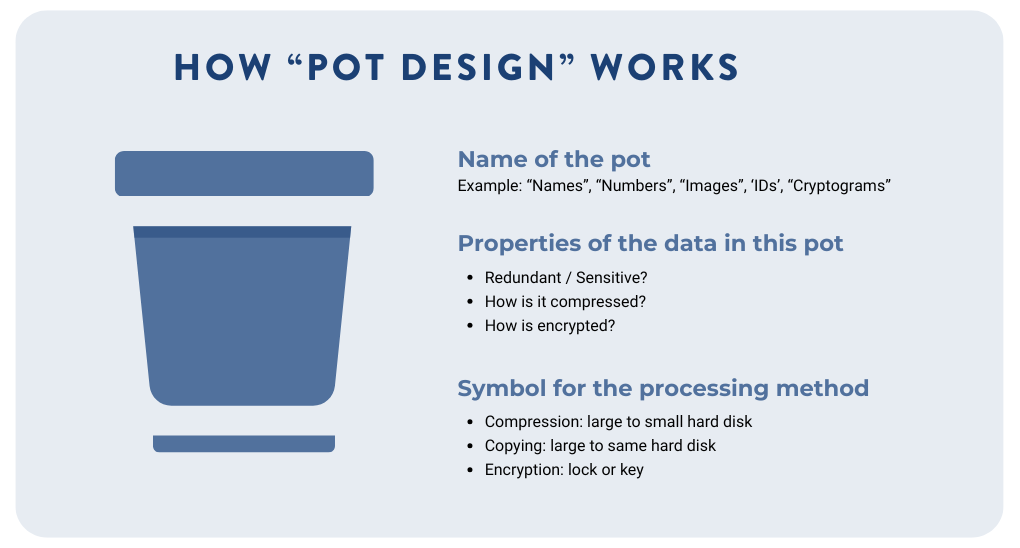
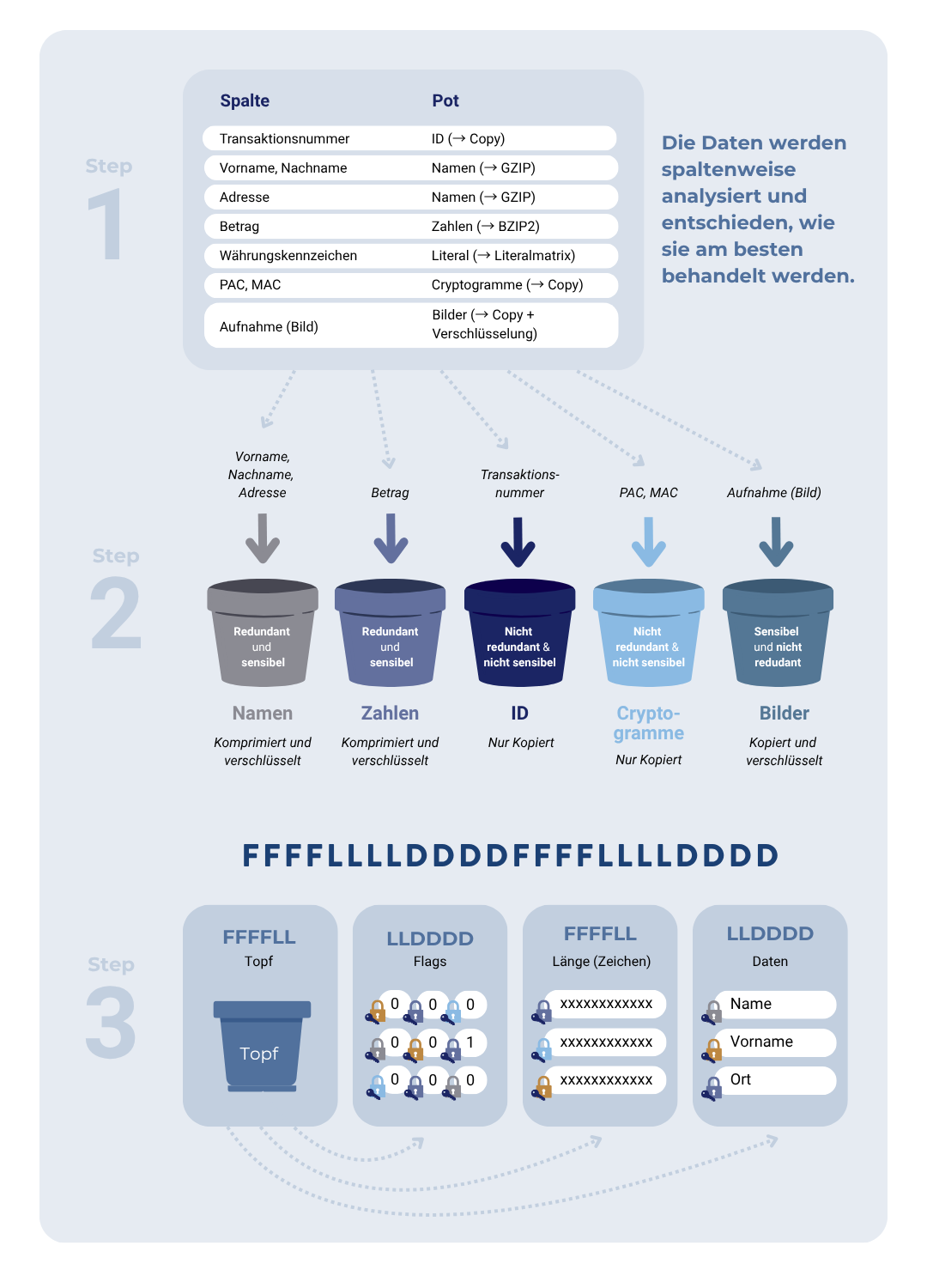
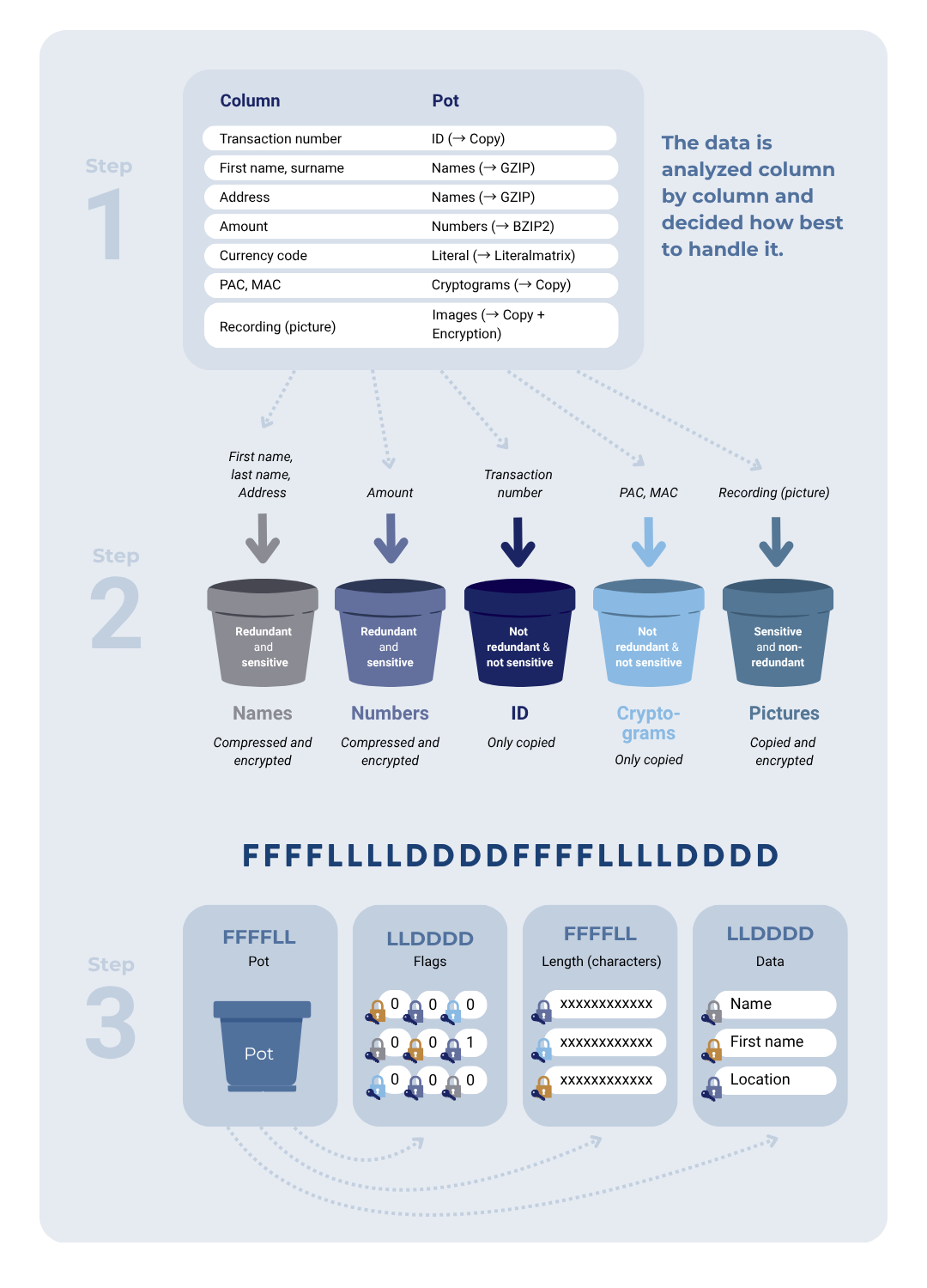
FLAM uses what is known as pot design to process data optimally. Each column is considered individually and processed in three buffers: flag, length, and value. For each of these areas, it can be determined separately whether and how the data should be encrypted or compressed. This increases efficiency and enables differentiated security handling.
Data Aware Architecture: Not all data is the same
In pot design, data is not only classified according to format or type, but also according to its significance for compression and security. Each column is analyzed to determine whether it is redundant (i.e., the same values occur frequently) and whether it is sensitive (i.e., contains information that needs to be protected). This determines how it is best processed:
By additionally using a global format matrix (e.g., for XML formats) and a literal matrix for frequently recurring terms (e.g., currency codes), FLAM saves storage and computing time without losing any information.
The key to FLAM's efficiency is its data-aware architecture: only what is truly worth protecting is encrypted. Only what is worthwhile is compressed. This saves computing power, storage space, and costs.
Pot Design in action
FLAM checks each column individually:
- Does it contain redundant values?
- Is it sensitive?
- Can it be compressed?
Depending on the result, each column ends up in a processing pot.
Each pot has its own strategy: compression, encryption, copying, or a combination.
This means that only what is really worth protecting is encrypted, and only what is worth compressing is compressed.
This saves storage space and computing power and makes data processing more efficient.
AUTOMATIC SWITCH TO COPY MODE
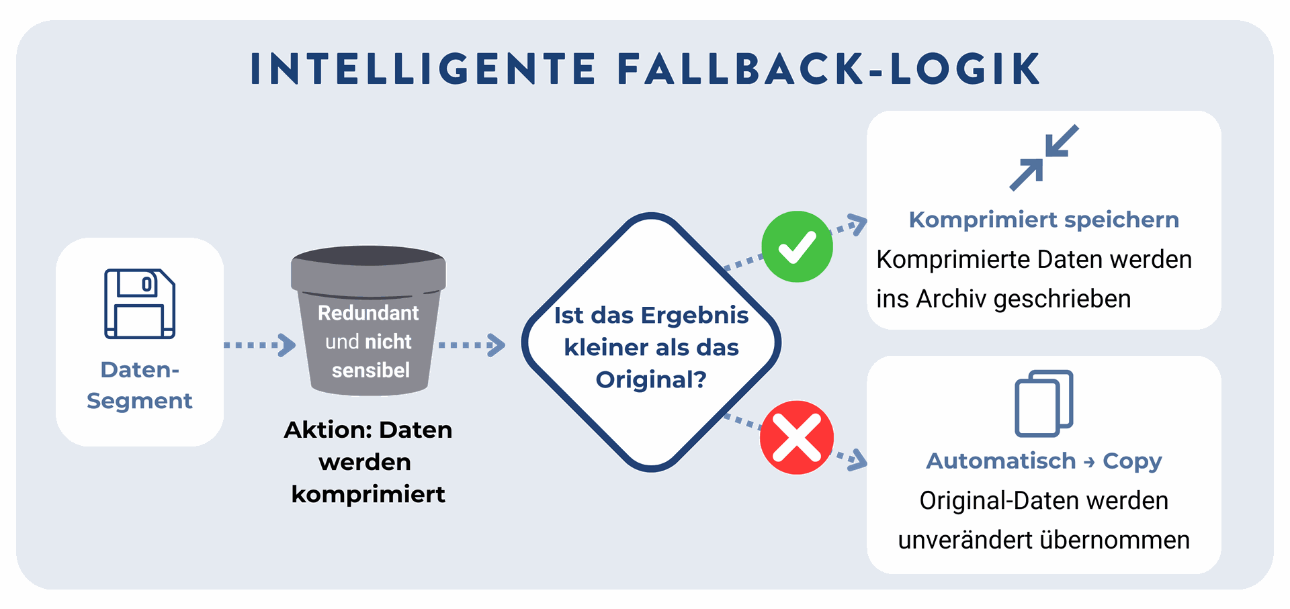
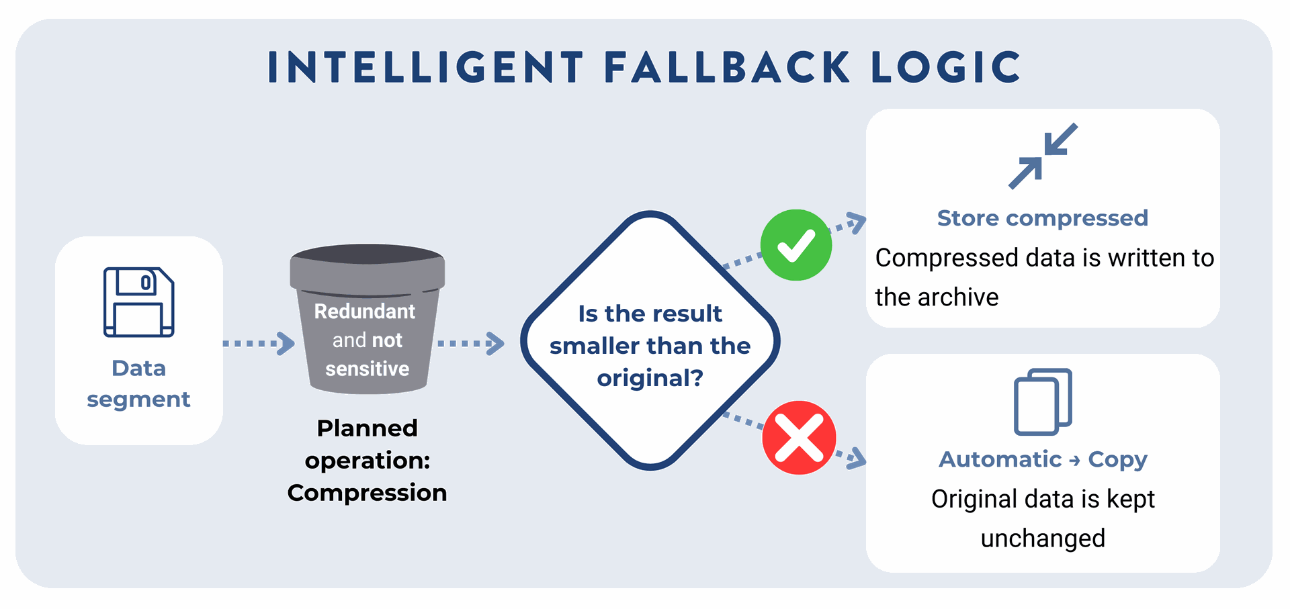
What happens if compression doesn't work? With some data (e.g., already compressed formats or random byte sequences), attempting to compress it can actually result in more data.
FLAM recognizes this automatically: If the compression of a segment leads to an expansion, FLAM switches to copy mode for this segment. This ensures that no more data than necessary ends up in the archive and avoids unnecessary computing effort during decompression.
How you benefit from FLAM
Sustainability & resource efficiency
Less storage space, lower bandwidth, less CPU time, minimal number of accesses and data segments that need to be transferred: FLAM not only saves costs, but also actively contributes to green IT.
Future-proof thanks to backward compatibility
Whether FLAM1 or FLAM5: your data remains accessible, secure, and convertible. FLAM stands for investment protection.
Compliance & data protection
FLAM's differentiated encryption and auditability not only meet regulatory requirements (e.g., GDPR, PCI DSS), but often exceed them.
Accelerated processes
Thanks to gradual parallelization and hardware support, large amounts of data are processed faster than with conventional compression tools.
Use data and preserve data
FLAM as a data broker
When your data is transferred between applications, systems, or locations, that's often where most errors occur: character set problems, format incompatibility, unexpected content, or missing encryption.
FLAM ensures that none of this happens in the first place. Fully automated and without manual adjustments.
Converts character sets and formats (ASCII, EBCDIC, UTF-8, text to records, etc.)
No read errors, no data loss, and no special scripts required.
Erkennt gängige Datenformate wie XML/CSV/JSON<--> FB/VB, SEPA<--> SWIFT<-->TDA usw. automatisch.
No technical coordination required: FLAM understands your data right away.
Integrates seamlessly into existing system landscapes
You don't have to rebuild your systems. FLAM adapts to your landscape.
FLAM as an archive architecture
As soon as data is no longer in active use, you need to archive it sustainably. FLAM offers the solution. Your data is converted into a well-designed, structured format that combines maximum storage efficiency and availability.
These advantages don't just apply to new data. FLAM can also be applied to existing data sets.
Column-based compression, more efficient than ZIP & Co
Less storage space required, shorter loading times, lower operating costs.
Enables targeted searches in protected archives without prior decryption
Each column is assigned its own index signature. This allows FLAM to perform targeted searches even in fully encrypted archives, without having to decrypt them completely.
Selective encryption Per column and content, not per file
Only sensitive data is protected. Efficient and compliant with data protection regulations.
FLAM thinks further than ZIP & Co.
FLAM does more than just compress. It optimizes your data. And it does so with a focus on security, traceability, and future-proofing.
- FLAM treats each data fragment individually
- Uses optimally suited methods (e.g., pattern matching, arithmetic coding)
- Saves enormous amounts of space by preprocessing redundant information.
Your data. Your control.
With FLAM, you decide which data is processed and how, while remaining secure, efficient, and fully traceable. Take advantage of our 40+ years of expertise for your compression solution.